Walk through any Australian home under construction and you’ll almost certainly see the same thing, pink or yellow batts tucked between timber studs, a vapour barrier stapled over the top and plasterboard to follow. Stud frame insulation is the default here, familiar, code-compliant, and widely understood by builders and installers alike.
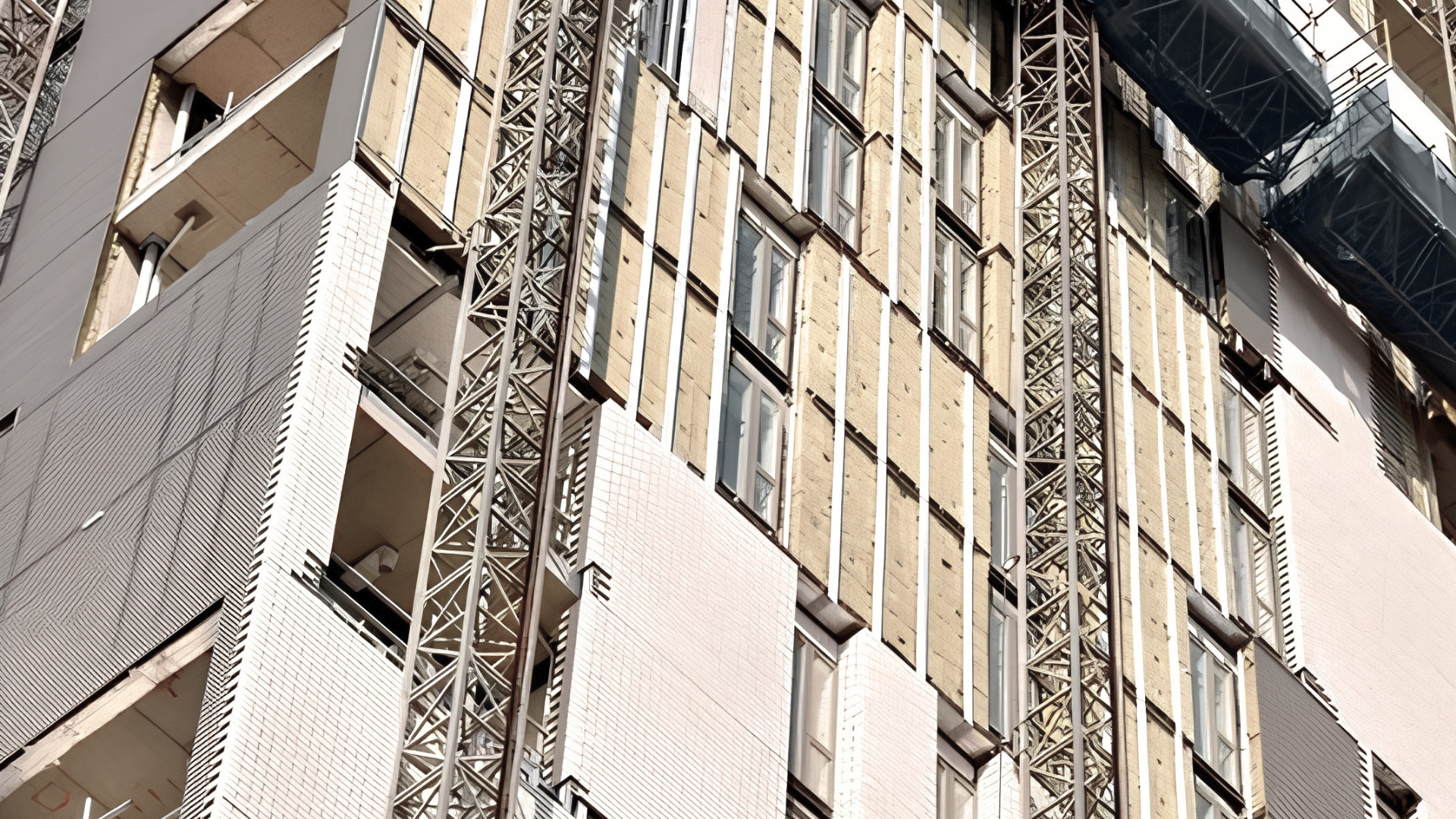
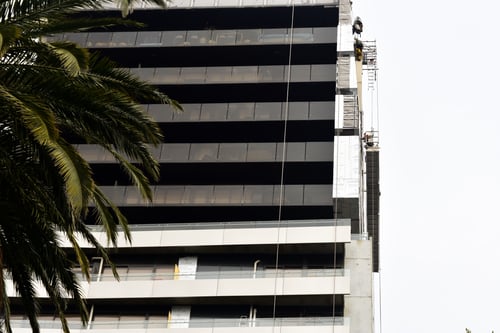
But across Europe, a different system dominates. Cavity insulation, particularly stone wool products like ROCKWOOL, is installed on the exterior of the structural wall, within a ventilated rainscreen system. It’s the approach used on high-rise residential towers, commercial facades and public buildings across the UK, Scandinavia and Germany.
As Australia’s construction industry grapples with tightening NCC energy-efficiency requirements, rising fire-safety expectations and increasingly complex facade systems, it’s worth understanding how these two approaches compare and where cavity insulation may offer advantages that the traditional stud-frame system simply can’t match.
A Direct Comparison
The table below summarises the key differences between the two systems across performance criteria most relevant to Australian projects:
|
|
Stud frame insulation
|
Cavity / rainscreen insulation
|
|
System type
|
Insulation fitted between internal timber or steel studs
|
Insulation fitted behind an external cladding system, within a ventilated cavity
|
|
Common in
|
Australia, North America, New Zealand
|
UK, Europe, Scandinavia
|
|
Primary function
|
Thermal and acoustic performance
|
Thermal, acoustic, fire and moisture management
|
|
Fire performance
|
Varies by product — requires additional fire-rated lining
|
Non-combustible stone wool provides an inherent A1/A2 fire rating
|
|
Moisture control
|
Relies on vapour barriers and internal linings
|
A ventilated cavity allows moisture to drain and dry naturally
|
|
Acoustic performance
|
Good for airborne sound between rooms
|
Reduces both airborne and impact sound; attenuates external noise
|
|
Thermal bridging
|
Thermal bridging through studs reduces overall performance
|
Continuous insulation layer eliminates stud bridging
|
|
Cladding flexibility
|
Interior system — cladding is separate
|
Integrates directly with rainscreen cladding systems
|
|
Building height
|
Commonly used for low‑ to mid‑rise buildings with conventional construction
|
Commonly used for high‑rise and complex commercial buildings, where DtS becomes restrictive
|
|
NCC compliance path
|
Deemed-to-Satisfy – Lightweight timber or steel stud‑frame walls are explicitly covered by NCC DtS provisions
|
Commonly assessed as a Performance Solution — more design flexibility
|
How stud frame insulation works
Stud frame insulation is installed between the vertical timber or steel studs of an internal wall frame. The insulation, typically glasswool or polyester batts, fills the void between studs and is held in place by friction or light stapling. A plasterboard lining is then fixed to the face of the studs, completing the wall assembly.
This system is straightforward to install, widely understood by the trade and well-supported by existing NCC Deemed-to-Satisfy pathways that use minimum R-values. For residential construction up to two storeys, it remains the dominant approach in Australia for good reason.
But the system has structural limitations that become more significant in commercial, multi-storey and facade-critical projects:
-
Thermal bridging: Heat transfers readily through the timber or steel studs themselves, bypassing the insulation. This reduces the wall assembly's effective R-value, sometimes significantly. Steel studs are particularly poor performers here.
-
Moisture vulnerability: Stud frame systems rely on vapour barriers and internal linings to manage moisture. Any failure of the barrier, penetrations, installation errors, or condensation in cold climates can lead to moisture accumulation in the wall cavity.
-
Cladding separation: The insulation layer and the external cladding are effectively separate systems. Managing the interface between them, especially regarding fire, weatherproofing and thermal continuity, requires careful coordination.
-
Reduced suitability at greater heights: As building height and facade complexity increase, stud‑frame insulation approaches a practical performance ceiling; alternative Performance Solutions are therefore commonly adopted to overcome these limitations.
How cavity and rainscreen insulation works
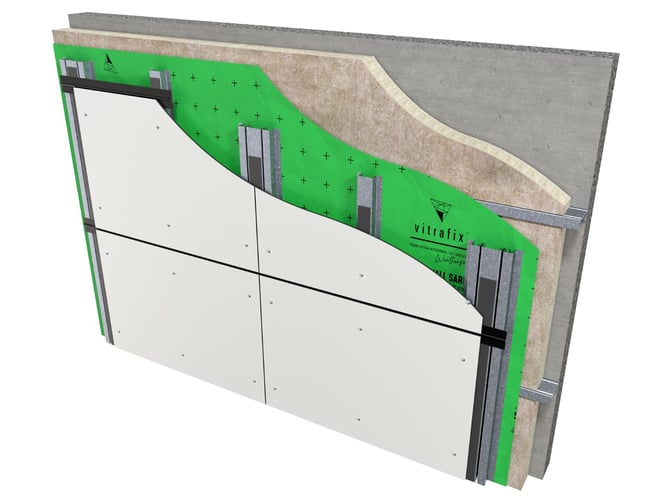
Cavity insulation, also called rainscreen insulation, takes a fundamentally different approach. Rather than being installed within the structural wall, the insulation is fixed to the exterior of the structural substrate with a ventilated cavity between the insulation and the external cladding.
The rainscreen cladding acts as the weathering face. The ventilated cavity behind it allows any water that penetrates the cladding joints to drain and evaporate, rather than accumulating in the wall construction. The insulation sits protected and continuous behind this system.
ROCKWOOL stone wool insulation is among the most widely specified products for this application globally. Its dense, rigid board format holds its shape within the subframe system, and its stone wool composition provides fire, thermal and acoustic performance in a single layer.
The case for cavity insulation in Australia
Australia’s residential construction market is well served by stud-frame insulation, but in mid- to high-rise residential, commercial, and mixed-use projects, cavity insulation offers performance advantages that are increasingly hard to ignore.
Fire safety
The Grenfell Tower fire in the UK in 2017 fundamentally changed how the global construction industry thinks about external wall insulation. The subsequent investigations, and Australia’s own parallel reviews, identified combustible cladding systems as a primary risk factor.
Stone wool insulation like ROCKWOOL is non-combustible. It achieves an A1 or A2 Euroclass fire classification, meaning it will not ignite, propagate flame or contribute to fire load. In an external facade application, this matters enormously, particularly for buildings where evacuation time is limited.
Many Australian states have now moved to restrict or prohibit combustible cladding on buildings over a certain height. Specifying a non-combustible insulation layer in the facade system is a straightforward way to address this risk at the material selection stage.
Thermal continuity
One of the most significant advantages of cavity insulation is the elimination of thermal bridging through the structural frame. Because the insulation is positioned as a continuous layer on the outside of the structure, there are no studs interrupting the insulating blanket.
In a standard 90mm steel stud wall, thermal bridging through the steel can reduce the insulation's effective R-value by 30–50%. This gap between specified and actual performance is a known problem in Australian construction, and NCC 2022 addresses it by requiring more stringent total wall R-values rather than simple product R-values.
Cavity insulation eliminates this gap. The insulation layer is continuous and uninterrupted, performing consistently across the entire wall face.
Moisture and weathering performance
Australia’s climate range, from tropical north Queensland to alpine Victoria, places significant and varied demands on wall assemblies. The rainscreen principle, with its ventilated cavity, is designed to manage moisture at the facade level rather than relying entirely on internal barriers.
Any water that penetrates cladding joints through wind-driven rain, failed sealants, or condensation drains to the bottom of the cavity and exits via the ventilation gap. The cavity also allows evaporation, preventing moisture from becoming trapped against the insulation or structural substrate. Stone wool does not absorb water and will not degrade if exposed to incidental moisture, unlike some foam-based products.
Acoustic performance
Dense stone wool has excellent sound absorption properties. In a rainscreen application, it reduces both airborne noise from the external environment and assists with impact sound reduction through the facade.
For residential buildings in urban locations or commercial buildings near noise sources, this is a meaningful performance advantage over a standard stud-frame wall with insulation only between the framing.
Where does Safe’n’Silent Pro350 fit in?
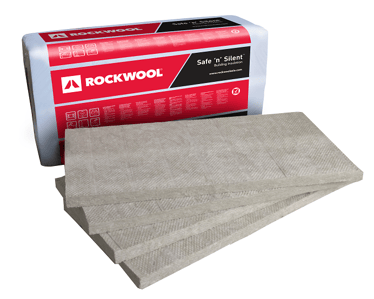
Not every application calls for a full rainscreen system. For internal walls, floor–ceiling assemblies and multi-residential construction, ROCKWOOL’s Safe’n’Silent Pro350 delivers the same stone wool performance characteristics in a format suited to internal installation.
Safe’n’Silent is commonly used to achieve NCC acoustic compliance between dwellings, particularly the Rw+Ctrwall ratings required for apartment buildings, as well as to improve the internal thermal performance of wall and ceiling assemblies. Its higher density compared to standard glasswool or polyester batts gives it superior acoustic properties in the critical mid-frequency range where speech and domestic noise are prevalent.
Where a project requires both fire performance and acoustic ratings in a single product, Safe’n’Silent is an efficient specification choice.
Specifying with confidence
The Australian construction industry is changing. NCC 2022 has raised the bar on energy efficiency. State-based cladding reforms have changed what can go on a facade. And the shift towards denser, taller urban housing is pushing the limits of what stud frame systems alone can achieve.
Cavity insulation isn’t a replacement for stud frame systems; it’s a complement to them. For the right project type, it offers a package of fire, thermal, moisture, and acoustic performance that is difficult to match with any other single product category.
ROCKWOOL stone wool insulation has been the backbone of European facade systems for decades. As Australian specifiers and builders look for solutions that meet an increasingly demanding performance brief, this product and system are worth understanding.
Effective 1 July 2026, ROCKWOOL has confirmed a 5% price increase across its range. In advance of this, Fairview is currently offering 25% off our entire ROCKWOOL range, subject to availability. For projects already in design or nearing procurement, this represents an opportunity to secure high-performance cavity insulation, while stocks last.