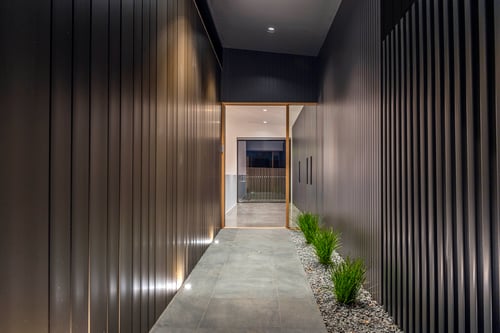
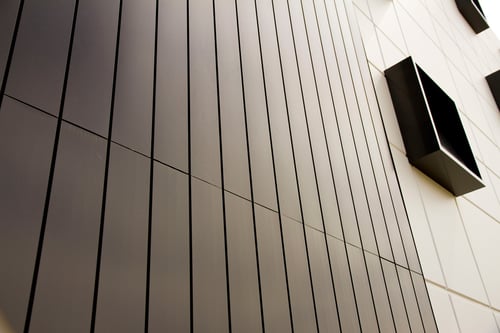
Timber has always held a special place in architecture. Its warmth, its grain, its connection to the natural world have made it one of the most enduring and emotionally resonant materials in the built environment. But as buildings grow taller, more exposed and more performance-demanding, woodgrain aluminium allows the spirit of timber to thrive where timber itself cannot.
How has timber's role in architecture evolved?
Timber moved through distinct phases across the twentieth century. As concrete, steel and glass came to dominate the architectural imagination, wood retreated largely to interiors, domestic construction and heritage contexts.
The last two decades brought a revival. Mass timber systems returned wood to the centre of architectural discourse, proving it could be structural, expressive and sustainable at scale. On facades, the appetite for timber's warmth translated into a surge in batten and screen applications. Then the practical realities of facade performance began to push back.
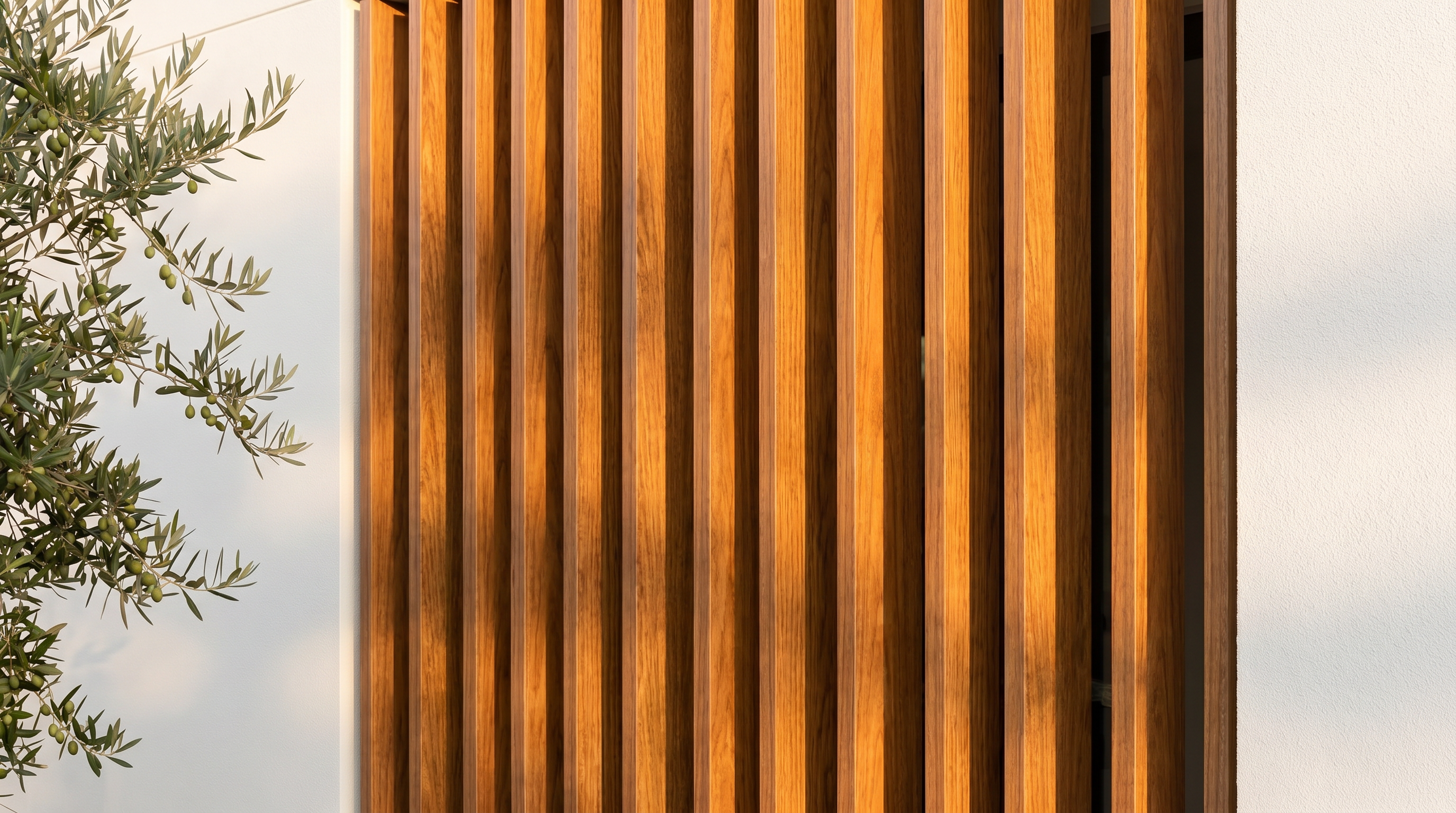
Woodgrain aluminium emerged as the next step in that evolution. Designers could replicate the warmth and grain character of natural timber while gaining the inherent performance advantages of an aluminium substrate:
- Dimensionally stable, with no expansion or contraction in response to moisture or temperature
- Non-combustible, with a straightforward NCC compliance path
- Corrosion resistant, with no degradation from coastal salt or UV exposure
- No rot, warping, cracking or biological growth
The result is a facade element that carries the design language architects and clients are drawn to in natural wood, without the performance limitations that make timber difficult to sustain on contemporary buildings.
What are Solara, Stryum and EzyHD2?
Fairview offers two woodgrain aluminium facade products, each suited to a different application but sharing the same high-performance coating technology.
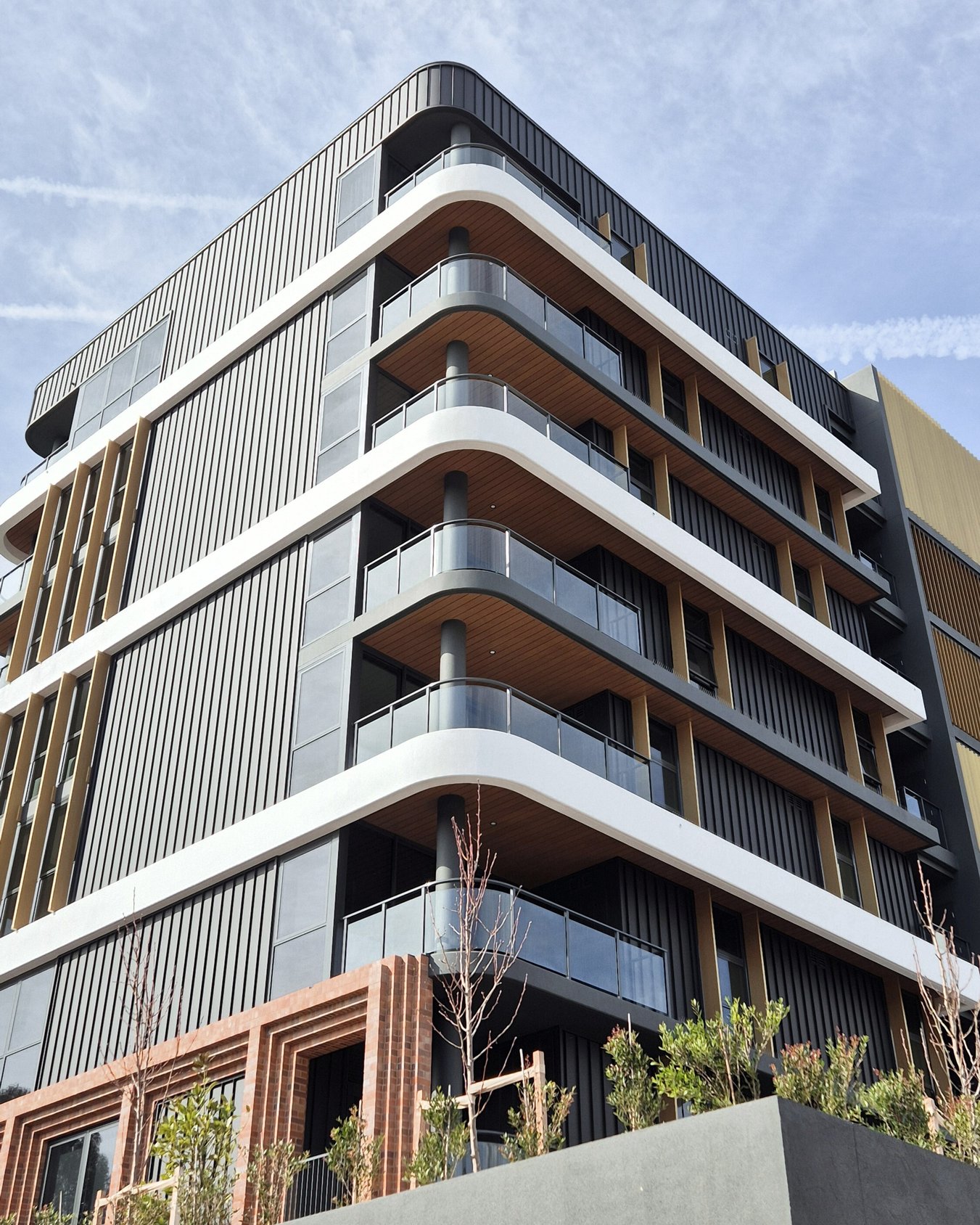
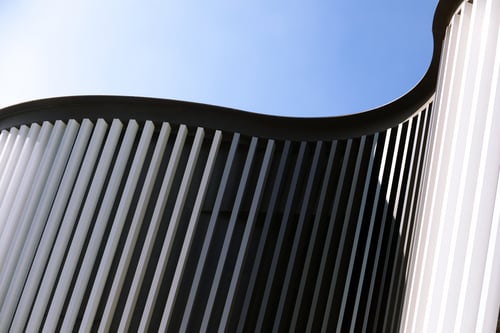
Solara is Fairview's architectural sunscreen and batten system. It uses aluminium and terracotta battens clip-fixed or screw-fixed to a rainscreen subframe, used to add rhythm, depth and shading across a building exterior. Solara is available in powder coat, anodised and woodgrain finishes and integrates directly with Fairview's broader cladding range.
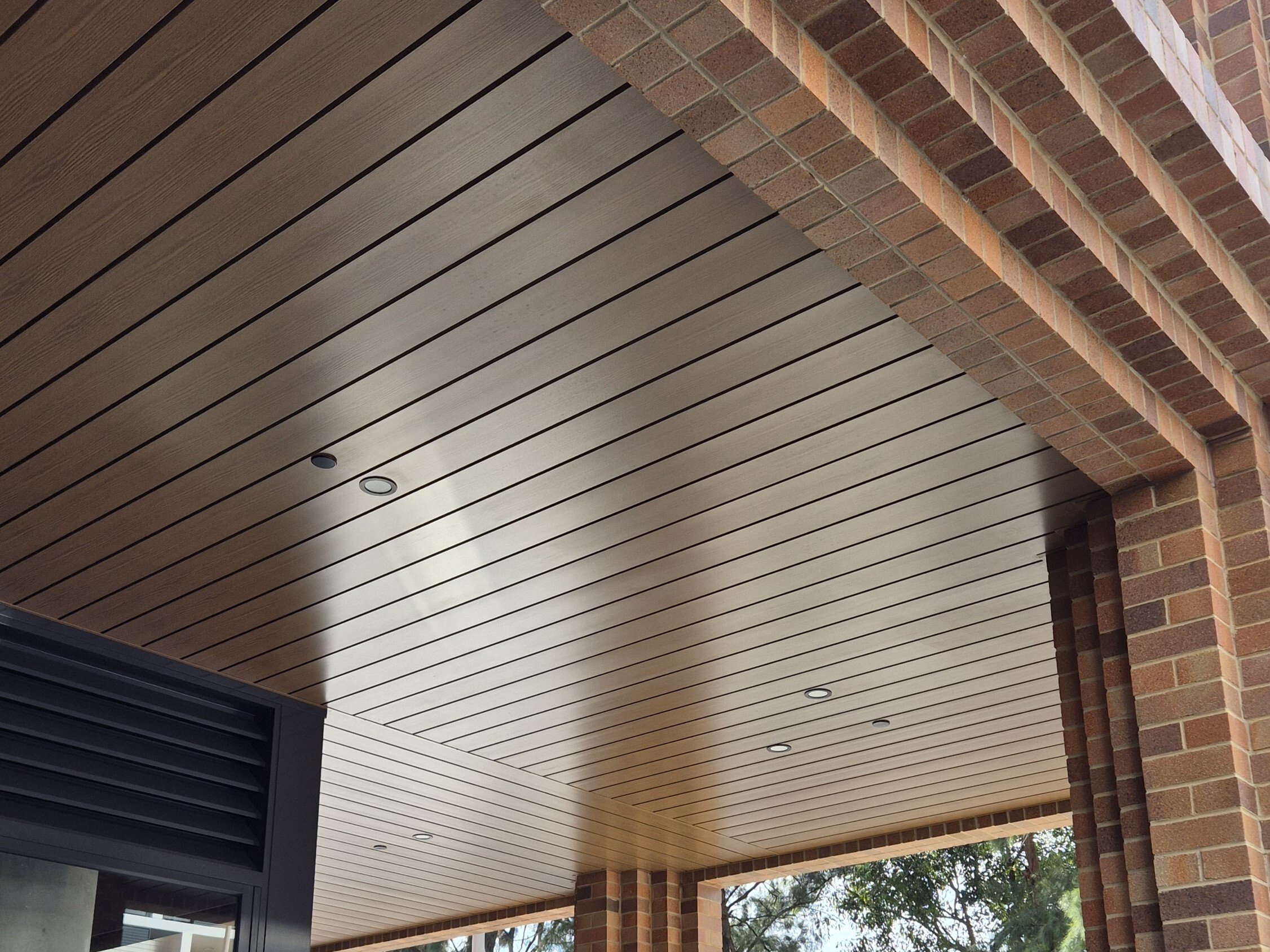
Stryum is Fairview's solid interlocking aluminium cladding system, used as the primary facade skin. It comes in a wide range of profiles and is available in powder coat, anodised and woodgrain finishes, with concealed fixings and a 50+ year design life.
Both are finished with EzyHD2, a powder-on-powder coating technology specifically engineered for exterior facade performance in Australian conditions. EzyHD2 produces a textured woodgrain surface with genuine depth and grain character, designed to hold its appearance across decades of UV exposure, coastal salt and temperature variation. It is this coating that gives both products their timber-like warmth, and it is not standard across the woodgrain aluminium category.
Woodgrain aluminium vs timber: at a glance
| |
Solara & Stryum |
Natural timber |
| Maintenance |
Routine cleaning only, no recoating or re-oiling required |
Recoating or re-oiling every 2–5 years depending on species, coating and exposure |
| Fire performance |
Non-combustible, straightforward NCC compliance across building types and heights |
Combustible, may require fire engineering, fire retardant treatment or a performance solution above certain heights |
| Dimensional stability |
Stable, with minimal expansion or contraction with moisture or temperature |
Expands and contracts with moisture and temperature, which can cause fixings to loosen over time |
| UV resistance |
EzyHD2 holds colour and texture across Australian climate conditions |
Bleaches and greys without ongoing maintenance |
| Moisture resistance |
No rot, delamination or biological growth |
Susceptible to rot, swelling and biological growth if maintenance lapses |
| Design life |
50-year-plus design life, 15-year product warranty |
Dependent on ongoing maintenance programme |
| NCC compliance path |
Non-combustible, suitable for Type A, B and C construction and Class 2–9 buildings above 11m without fire engineering |
Combustible, requires careful fire engineering for Class 2–9 buildings above 11m |
| Appearance |
Textured woodgrain finish reads as timber at typical facade viewing distances |
Natural grain, tactile warmth, variation between pieces |
| Recyclability |
100% recyclable aluminium at end of life |
Biodegradable, sustainably sourced options available |
Woodgrain aluminium vs timber: how does facade maintenance compare?
Exposed exterior timber requires a committed, ongoing programme of care. Recoating or re-oiling is typically required every two to five years, depending on species, coating system and exposure conditions. On a residential fence or deck that programme is manageable. On a multi-storey facade above occupied space it becomes a significant logistical and financial burden, and one that building owners and facilities managers increasingly push back on at the point of specification.
When maintenance lapses, the consequences are visible. Timber bleaches and greys under UV, coatings crack and delaminate, and moisture penetrates, bringing with it the risk of rot, swelling and biological growth.
Solara and Stryum with EzyHD2 ask very little by comparison:
- Routine cleaning with water and mild detergent at intervals consistent with general facade maintenance
- No recoating, re-oiling or surface refreshing required
- No UV bleaching, delamination risk or biological growth
- No element replacement from moisture-related degradation
Over a thirty-year building life, the difference in cumulative cost and disruption is substantial.
Does woodgrain aluminium meet NCC fire compliance requirements?
Timber is combustible. Following NCC reforms, its use on facades above certain heights and in certain building classifications requires careful fire engineering, fire retardant treatments or a performance solution, and often a combination of all three. This doesn't make timber impossible to specify, but it adds cost, time and complexity to the process.
Aluminium is non-combustible. Both Solara and Stryum do not contribute to the spread of flame and carry a straightforward compliance profile across the range of building types and heights where timber's fire performance becomes complex. For Class 2–9 buildings above 11 metres in particular, specifying aluminium removes that layer of compliance work from the facade entirely.
How does woodgrain aluminium handle expansion and contraction?
Timber expands and contracts in response to changes in moisture and temperature. In a facade assembly that movement needs to be carefully managed. Over time, gaps can open between elements, fixings can work loose and the precise geometric rhythm that reads so well in an architectural drawing can shift in the real world.
Aluminium does not have this problem. Solara and Stryum profiles are dimensionally stable across the full range of Australian climate conditions, holding their geometry and fixing integrity across decades of thermal cycling and weather exposure.
How does woodgrain aluminium perform in UV and coastal conditions?
Untreated or poorly maintained timber bleaches, dries and greys under sustained UV exposure. Even well-maintained timber facades require ongoing attention to preserve their original appearance, and the rate of visible change is often faster than clients expect when specifying.
EzyHD2 is engineered specifically to resist this. Developed in Europe and refined for Australian conditions, the powder-on-powder coating holds its colour and texture across high UV intensity environments, coastal salt exposure and significant temperature variation.
Is woodgrain aluminium resistant to moisture and rot?
Moisture is timber's most persistent challenge on a facade. Penetration through failed coatings, cracked elements or poorly detailed junctions leads to rot, swelling and biological growth. On a building that will be occupied and maintained for decades, that risk compounds over time.
Aluminium does not absorb moisture. Solara and Stryum profiles will not rot, swell or support biological growth regardless of the conditions they are exposed to, and their performance does not degrade if cleaning intervals are extended.
Does woodgrain aluminium look like real timber?
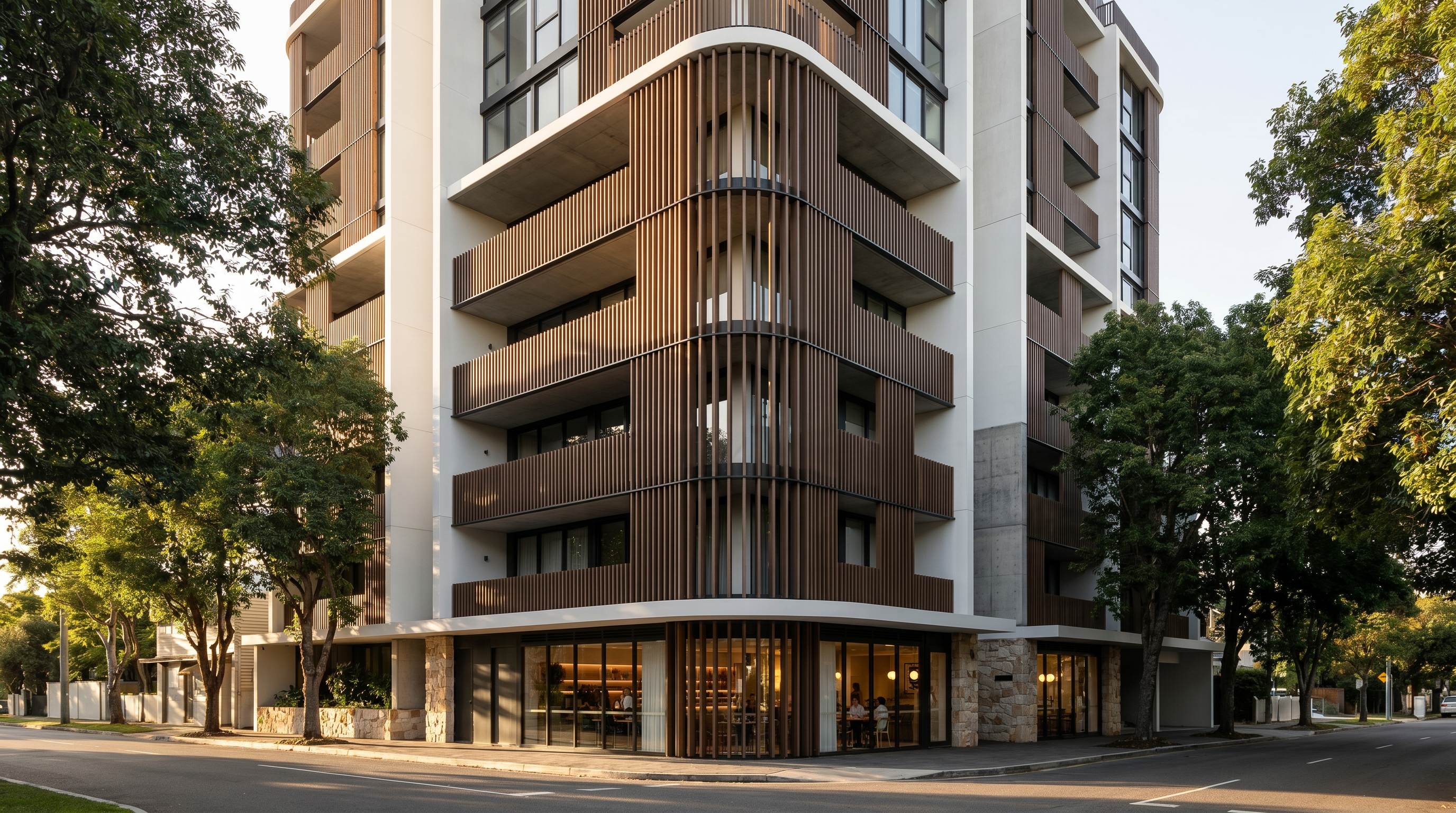
At the viewing distances typical of facade experience, Solara and Stryum's EzyHD2 finish is compelling. The textured surface produces a depth and grain quality that reads convincingly as timber across a building exterior. 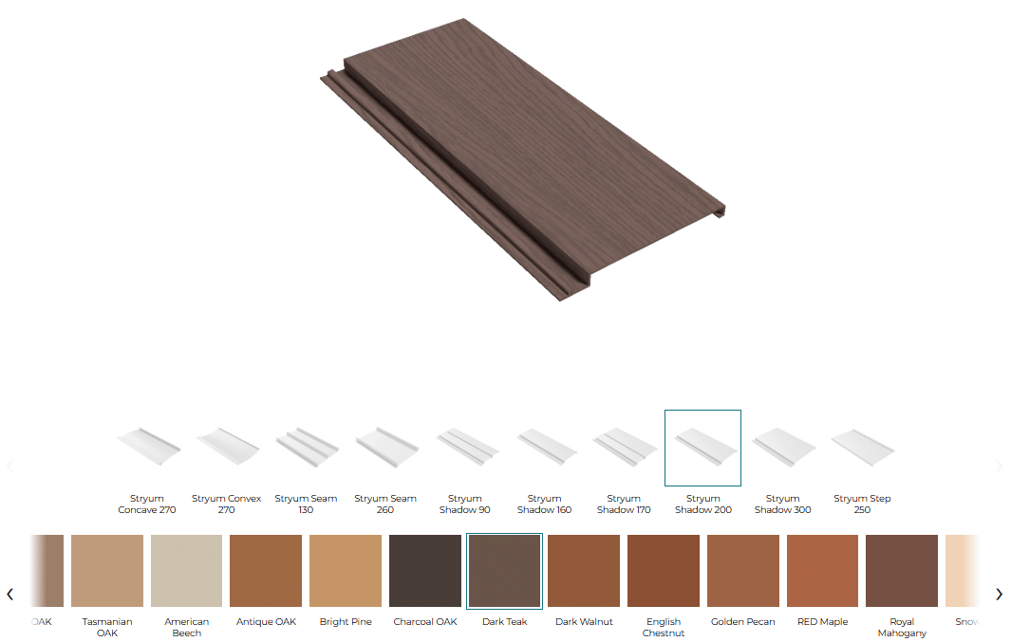
Up close, natural timber carries qualities no manufactured finish fully replicates: the irregularity of grain, the variation between pieces and the tactile softness of real wood. For applications where an intimate material encounter is central to the experience, a residential entry, a low courtyard wall or a tactile threshold detail, those distinctions matter and natural timber remains the right choice.
For facade applications viewed at distance and experienced as part of a larger compositional whole, Solara and Stryum deliver the warmth and visual intention of timber without the performance compromises.
Is woodgrain aluminium sustainable?
Solara and Stryum are made from aluminium, which is 100% recyclable at end of life and can be reprocessed without loss of material quality. For projects targeting sustainability credentials or seeking to reduce embodied carbon across the building lifecycle, this is a meaningful advantage.
Natural timber from sustainably managed sources carries its own environmental credentials, and the two materials are not straightforwardly comparable on this point. What aluminium offers is certainty: a clear and established end-of-life pathway regardless of the project's future.
The future of timber in architecture
Timber continues to offer something irreplaceable in structural mass timber applications, interior fit-out and low-level exterior elements where tactile quality matters. On contemporary facades, particularly those at height, those requiring low maintenance and those subject to NCC fire performance provisions, woodgrain aluminium increasingly carries timber's design legacy forward.
Fairview's Solara and Stryum ranges make this available across a broad range of facade applications, with EzyHD2-coated aluminium engineered for Australian conditions and backed by Fairview's full technical and compliance capability.