Australia's climate extremes from tropical downpours in the north to arid heat in the interior place significant demands on building envelopes. While external cladding provides the visible first line of defence, the true performance of a façade system relies on what sits behind it. Wall sarking, often overlooked in design conversations, plays a critical role in moisture management, thermal performance and long-term durability. As building codes tighten and performance expectations rise, understanding how weatherproofing membranes function within ventilated wall systems has become essential for architects, builders and specifiers alike.
What Is Wall Sarking?
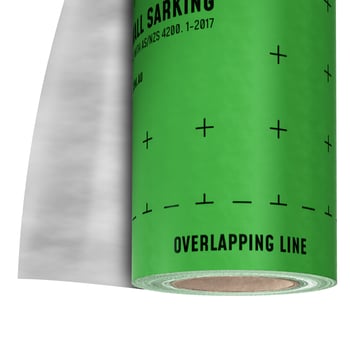
Wall sarking is a weatherproofing membrane installed between the structural frame and external cladding. Also referred to as a building wrap, vapour-permeable membrane, or weather-resistive barrier, sarking forms a secondary defence layer that manages moisture, wind and thermal transfer within the wall cavity.
Unlike traditional impermeable barriers, modern wall sarking is engineered to be vapour permeable, allowing moisture vapour to escape from within the wall cavity while preventing bulk water ingress from outside. This breathable characteristic is crucial in preventing condensation build-up, which can lead to mould growth, timber rot, and corrosion of metal framing components.
In Australian construction, wall sarking must comply with AS/NZS 4200.1, which sets minimum standards for water resistance, UV stability, and vapour permeability. When integrated with Fairview's Vitrafix subframing systems, sarking becomes part of a complete weatherproofing strategy that supports both compliance and long-term façade performance.
The Role of Weatherproofing Membrane in Modern Facades
A weatherproofing membrane serves multiple functions within a ventilated rainscreen system. Its primary role is to deflect water that penetrates through joints, gaps, or imperfections in the external cladding. In wind-driven rain events common across coastal Australia, even well-detailed cladding systems can allow moisture behind the façade. The sarking layer intercepts this water, directing it downward and outward through proper drainage pathways.
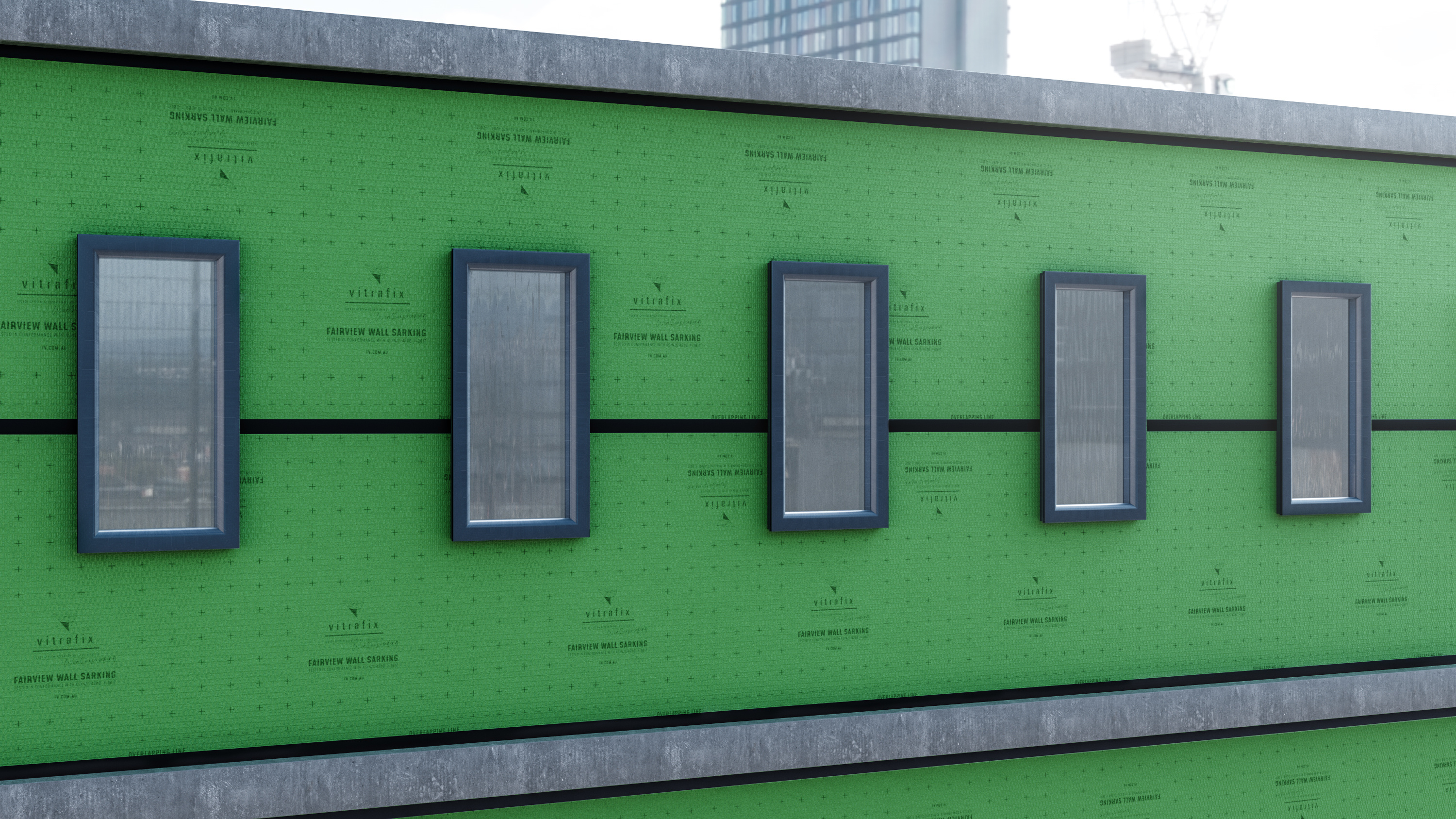
Beyond water management, sarking provides an air barrier that reduces wind infiltration and heat loss. This contributes to improved thermal efficiency under NCC Section J requirements, helping maintain stable internal temperatures and reducing mechanical heating and cooling loads.
When combined with ventilated top hats and appropriate cavity depths, wall sarking supports passive airflow behind the cladding. This ventilation allows any moisture that does penetrate the system to evaporate naturally, preventing the concealed dampness that compromises structural integrity and indoor air quality.
Fairview's approach to complete wall systems integrates sarking as a non-negotiable component. Whether specifying for Genesis fibre-cement, Smartbric brick façades, or Stryum aluminium cladding, the performance of the entire assembly depends on the correct selection and installation of sarking.
Condensation Prevention: Why Vapour Permeability Matters
Condensation within wall cavities is one of the most insidious threats to building performance. It occurs when warm, moisture-laden air meets cooler surfaces, causing water vapour to condense into liquid. In Australian climates with high humidity and significant temperature differentials between indoor and outdoor environments, this risk is ever-present.
Traditional impermeable membranes trap moisture inside the wall cavity, creating ideal conditions for mould, rot, and material degradation. Modern vapour-permeable sarking solves this by allowing moisture vapour to pass through while still blocking liquid water. This breathability is measured in grams per square metre per 24 hours (g/m²/24h), with higher values indicating better vapour transmission.
For condensation prevention to be effective, the entire wall system must be designed to manage moisture in both directions. External cladding sheds bulk water. Sarking provides secondary protection and vapour permeability. Ventilated cavities allow any residual moisture to dry naturally through airflow.
This layered approach is particularly important in climate zones where internal heating or cooling creates pressure differentials that can drive moisture into wall cavities. Without proper vapour barrier wall design, or more accurately, vapour permeable design, concealed moisture accumulation can go undetected for years until structural damage becomes apparent.
Wall Sarking Installation: Best Practices for Performance
Correct wall sarking installation is as important as the membrane itself. Poor detailing at penetrations, inadequate overlap at joints, or insufficient support can compromise the entire system's weatherproofing performance.
Key installation principles include:
Continuous Coverage: Sarking must be installed over the entire external wall surface, with no gaps or tears. This creates an unbroken weather barrier that protects the structural frame.
Proper Overlap: Horizontal joins should overlap by at least 150mm, with upper sheets lapping over lower sheets to shed water downward. Vertical joins should similarly overlap and be positioned over framing members where possible.
Sealed Penetrations: Any penetrations for windows, services, or structural elements must be carefully detailed with compatible flashing tapes or sealants to maintain membrane continuity.
Support and Tension: Sarking should be adequately supported and installed with moderate tension—not sagging, but not stretched tight. This allows the membrane to accommodate building movement without tearing.
Integration with Flashings: Window and door head flashings must integrate correctly with the sarking layer to direct water away from vulnerable openings.
When used with Vitrafix accessories, wall sarking installation becomes more streamlined. Vitrafix brackets and rails can be fixed through the sarking into the structural frame without compromising membrane integrity, provided proper sealing at fixing points is maintained.
For projects requiring enhanced weatherproofing, Fairview's weatherproofing solutions include specification guidance on sarking types, fixing methods, and drainage detailing appropriate to different cladding systems and exposure conditions.
How Wall Sarking Supports NCC Compliance
The National Construction Code (NCC) sets performance requirements for moisture management, thermal efficiency, and durability, all areas where wall sarking contributes directly to compliance.
Under NCC Section J (Energy Efficiency), building envelopes must achieve minimum thermal resistance and limit air leakage. Wall sarking provides an air barrier that reduces uncontrolled air movement through the wall assembly, improving overall thermal performance and reducing heat loss or gain.
While sarking itself doesn't provide significant insulation value, it protects insulation materials from moisture damage that would degrade their thermal performance. Wet insulation rapidly loses R-value, undermining energy-efficiency provisions and potentially causing long-term durability issues.
NCC Section B (Structure) requires buildings to resist moisture-related deterioration. By preventing water penetration to structural framing and supporting condensation management through vapour permeability, sarking helps maintain structural integrity over the building's design life.
For bushfire-prone areas, some sarking products are tested for ember protection and radiant heat resistance, supporting compliance with AS 3959 requirements for construction in BAL zones.
Fairview provides technical documentation that outlines appropriate sarking specifications for different façade systems, helping designers meet NCC requirements while achieving long-term performance targets.
Choosing the Right Sarking for Your Facade System
Not all sarking products are created equal. Selection depends on climate zone, cladding type, exposure conditions, and specific performance requirements.
For high-humidity coastal environments, sarking with high vapour permeability and UV stability is essential. Extended UV exposure during construction phases can degrade lower-quality products before cladding installation.
For bushfire-prone areas, fire-resistant sarking that meets AS 3959 testing may be required, particularly in higher BAL ratings where ember protection is critical.
For ventilated rainscreen systems like those using Genesis, Vitradual, or Vitracore G2, the sarking must support moisture drainage and vapour transmission while maintaining structural support for ventilated cavities created by top hats and rails.
Fairview's façade systems are designed to accommodate industry-standard sarking products that meet the requirements of AS/NZS 4200.1. Installation guides specify appropriate membrane types, fixing methods, and integration details to ensure the complete wall assembly performs as intended.
Conclusion: Wall Sarking as Essential Infrastructure
Wall sarking is essential infrastructure that determines whether a façade system will succeed or fail over time. Its role in moisture management, condensation prevention, and thermal performance makes it a critical component in meeting both regulatory requirements and occupant expectations.
For projects across Australia's diverse climate zones, specifying appropriate weatherproofing membrane and ensuring correct installation provides insurance against concealed moisture damage, structural degradation, and premature façade failure. When integrated with ventilated subframing and quality cladding materials, sarking becomes part of a resilient building envelope that performs reliably for decades.
Ready to specify a complete, weatherproof façade system?
Explore Fairview's range of cladding solutions and access our installation guides for proper wall sarking integration. Contact our technical team for project-specific guidance on weatherproofing.