Australia's building landscape demands materials that can withstand extreme weather, bushfire risk, and stringent regulatory standards. From coastal humidity to inland heat, the façade systems we specify must perform under pressure while meeting National Construction Code (NCC) requirements. Fibre cement cladding has become a go-to solution for architects and builders seeking a balance of durability, fire resistance and compliance. But how does it actually perform in terms of weatherproofing, fire rating and regulatory approval? Let's examine the technical realities behind this popular cladding material.
What Is Fibre Cement Cladding and How Is It Used?
Fibre cement is a composite building material mainly made from cement, cellulose fibres and sand. This combination creates a dense, durable sheet product that resists warping, rotting and insect damage. Unlike timber or metal alternatives, fibre cement maintains dimensional stability across temperature fluctuations and moisture exposure, making it particularly suited to Australia's variable climate.
In residential and commercial construction, fibre cement is commonly used for external wall systems, providing both structural integrity and aesthetic versatility. Panels, boards and sheets can be installed vertically or horizontally, with finishes ranging from smooth render-look surfaces to textured profiles that mimic natural materials.
Fairview's Genesis fibre cement façade system exemplifies this versatility. Available in large-format panels up to 3050mm in length, Genesis integrates seamlessly into ventilated rainscreen systems, supporting passive airflow while delivering the performance characteristics architects and builders depend on.
Is Fibre Cement Cladding Weatherproof?
Fibre cement cladding is highly weather-resistant, but it's important to distinguish between water resistance and true weatherproofing. The material itself resists moisture penetration and doesn't deteriorate when exposed to rain or humidity. However, like most cladding materials, it is not inherently weatherproof on its own.
The weatherproofing performance of a fibre-cement system depends on proper installation within a complete wall assembly. When installed as part of a rainscreen façade with appropriate membranes, flashings, and cavity ventilation, fibre cement boards and panels contribute to an effective weatherproofing strategy. Moisture that penetrates the outer cladding layer is managed by the cavity behind it, where passive ventilation allows evaporative drying.
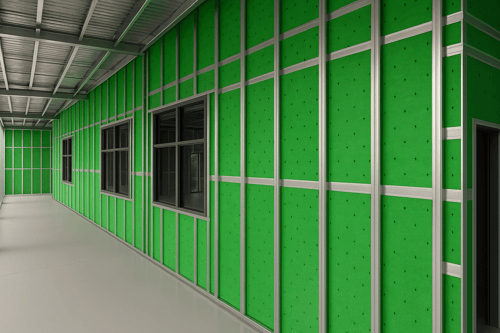
Fairview's installation approach ensures that the Genesis fibre-cement sheet is supported by weatherproof membranes and ventilated subframing. This layered defence manages bulk water deflection at the cladding surface while controlling residual moisture within the wall cavity. Properly sealed joints, correctly detailed penetrations, and adequate drainage pathways are critical to achieving overall system weatherproofing.
In coastal or high-humidity environments, fibre-cement's composition makes it particularly resilient. Unlike steel, it doesn't corrode in salt-laden air. Unlike timber, it doesn't swell or rot when exposed to persistent moisture. This makes weatherproof fibre cement cladding systems a practical choice for projects where moisture management is a primary concern.
Is Fibre Cement Cladding Fireproof or Fire Rated?
Under the National Construction Code (NCC) 2022, fibre cement cladding is deemed non‑combustible, reinforcing its suitability for use in fire‑regulated and bushfire‑prone environments. This classification reflects the material’s proven performance in standardised fire testing and its ability to meet stringent Australian building compliance requirements.
Unlike combustible façade materials, fibre cement does not ignite, does not sustain flame, and does not contribute fuel to a fire. While no construction material can be described as completely “fireproof,” fibre cement’s non‑combustible status ensures predictable and reliable behaviour under fire exposure—an essential consideration for regulatory compliance and life safety.
In accordance with AS 3959:2018 “Australian Standard for construction of buildings in bushfire-prone areas”, Fibre cement sheeting satisfies the fire performance requirements applicable to Bushfire Attack Level (BAL) zones, including BAL‑29 and BAL‑40(9mm thickness), and, when incorporated into compliant wall system configurations, can also support applications within BAL‑FZ (Flame Zone) areas. As a result, fibre cement cladding remains a preferred external wall material for bushfire‑resilient construction across regional, peri‑urban, and high‑risk landscapes in Australia.
Fire performance is validated through recognised Australian test standards, including AS 1530.3 (Early Fire Hazard Properties). Fibre cement consistently meets the criteria for non‑combustible construction, producing minimal smoke and no flaming droplets or toxic fuel contribution when exposed to fire.
Fairview’s Genesis cladding system is supported by comprehensive technical documentation demonstrating compliance with NCC 2022 fire safety provisions. This includes independent third‑party test reports, system assessments, and installation guidelines that address critical wall assembly components such as sub‑framing, insulation types, cavity design, and sarking membranes—ensuring the cladding system performs as intended under fire conditions.
In bushfire zones, NCC‑compliant non‑combustible external wall systems such as Genesis provide a critical layer of protection. Combined with compliant detailing around penetrations, openings, and junctions, fibre cement cladding helps mitigate ember attack and radiant heat exposure, which are among the primary causes of building ignition during bushfire events.
NCC Compliance: Is Fibre Cement Approved for Use in Australian Construction?
Fibre cement cladding is widely approved for use in Australian construction and readily achieves compliance with the National Construction Code (NCC). The NCC sets out performance requirements for non-combustibility, fire resistance, structural adequacy, and moisture management, all areas where fibre cement excels.
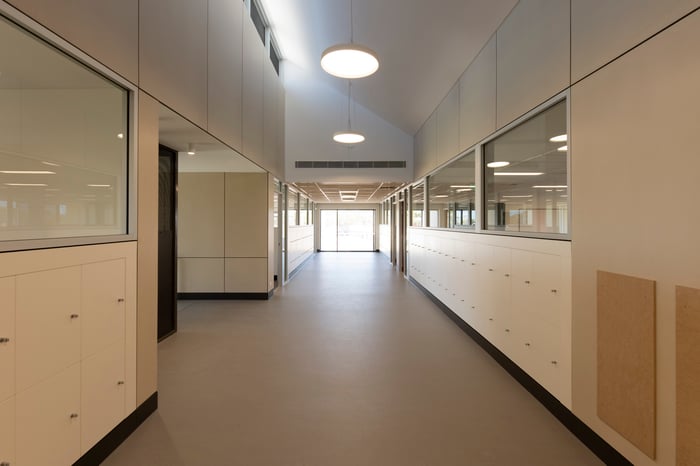
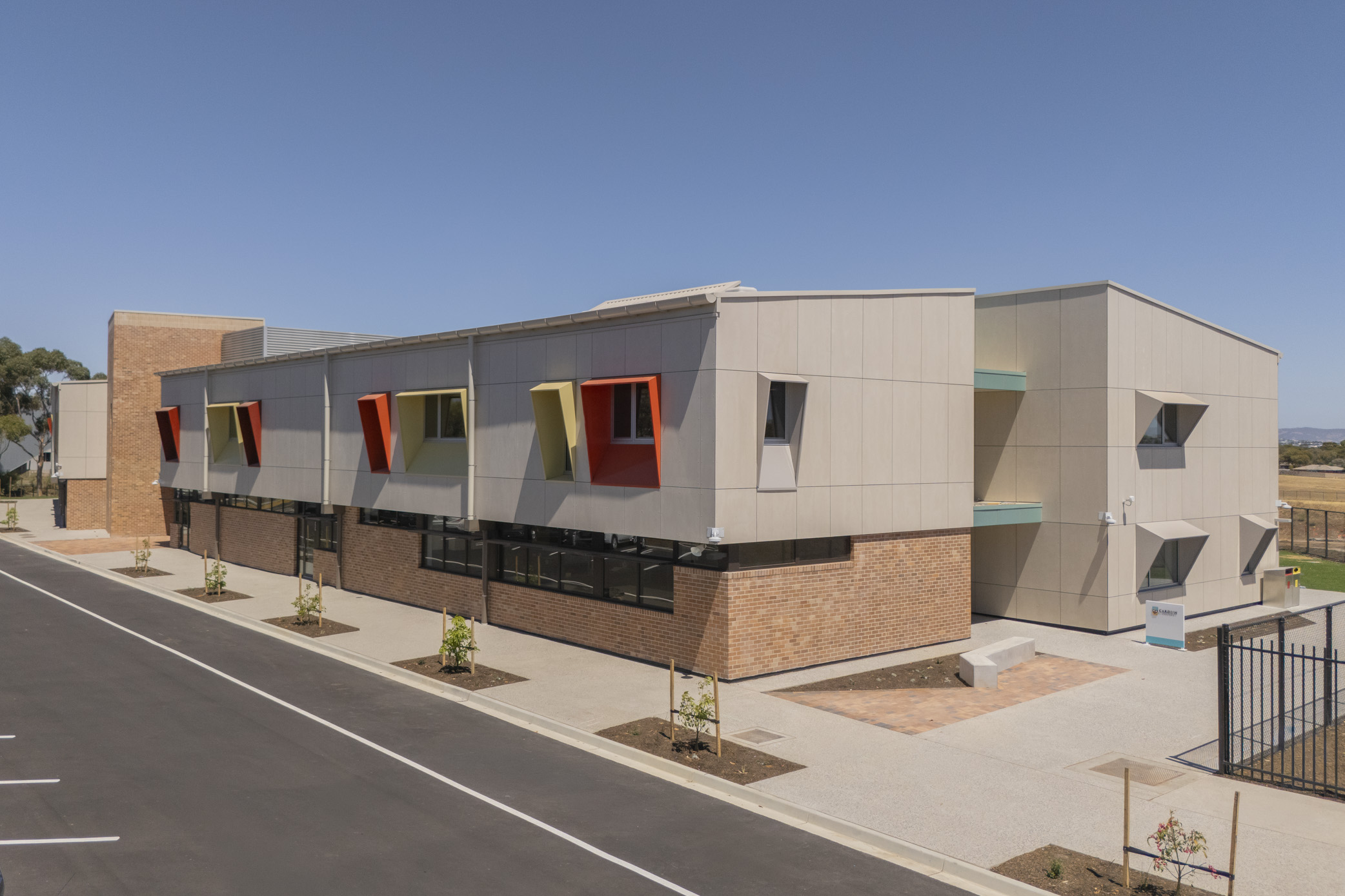
Marian West Campus, Cardijn College SA
Under NCC Section B (Fire Resistance), fibre cement cladding can be specified to meet the required Fire Resistance Level (FRL) for external walls, particularly in multi-residential and commercial buildings. Its non-combustible classification supports compliance with NCC Section C (Fire Safety) requirements for bushfire-prone areas, where materials must resist ignition and limit flame spread.
NCC Section J (Energy Efficiency) also influences cladding selection, as façade systems contribute to a building's overall thermal performance. When integrated into a ventilated rainscreen system, fire-rated external wall cladding like Genesis supports passive thermal regulation, helping reduce reliance on mechanical heating and cooling.
Fairview provides specification documents, installation manuals, and BIM files to assist with NCC-compliant design and documentation. These resources outline appropriate fixing methods, cavity depths, and membrane compatibility to ensure that Genesis fibre cement systems meet regulatory standards and perform as intended over the building's lifespan.
For architects and certifiers, the availability of CodeMark certification and third-party testing data provides confidence that fibre cement board systems are suitable for external wall applications across a range of building types and fire classifications.
Fibre Cement Cladding for External Wall Applications
Fibre cement's resilience in both wet and fire-prone environments makes it a practical choice for external façades. In coastal regions, its resistance to salt corrosion outperforms steel alternatives. In bushfire zones, its non-combustible properties provide critical protection without compromising design intent.
Common applications include low-rise residential builds, multi-residential developments, and commercial façades where durability, low maintenance, and compliance are priorities. The material's compatibility with ventilated rainscreen systems supports long-term moisture management, reducing the risk of concealed condensation and structural degradation.
Large-format panels like those available in the Genesis range streamline installation and reduce joint frequency, improving both weathertightness and aesthetic continuity. The system's flexibility allows for horizontal or vertical installation, enabling architects to achieve clean lines and modern profiles without sacrificing performance.
Fire-rated cement sheeting is particularly valuable in bushfire-prone areas, where building regulations mandate non-combustible materials and tested assembly performance. When combined with appropriate subframing and membranes, external fireproof cladding systems deliver the regulatory compliance and physical resilience required in high-risk environments.
Conclusion: Is Fibre Cement the Right Choice for Your Project?
Fibre cement cladding offers a compelling combination of weather resistance, fire performance and NCC compliance, performing exceptionally well within properly designed rainscreen systems. Its non-combustible classification and high fire resistance make it suitable for bushfire zones and fire-rated construction. And its proven track record of regulatory compliance ensures it meets the demands of Australian building standards.
For projects where moisture management, fire safety, and long-term durability are critical, fibre cement cladding systems like Fairview's Genesis provide a reliable, compliant solution. Whether you're specifying for coastal exposure, bushfire-prone regions, or multi-residential developments, Genesis delivers the technical performance and design flexibility modern Australian construction demands.
Ready to specify a weatherproof and fireproof wall system for your next project?
Explore Fairview's Genesis fibre cement range and access our technical documentation for compliant external cladding solutions. Contact our team for project-specific guidance.