Selecting the correct sub‑framing is vital to ensuring a building’s long‑term durability, structural integrity and code compliance. While galvanised and Zinc-Aluminium-Magnesium (Zn-Al-Mg) coatings are both established corrosion‑protection systems, their performance diverges, particularly in environments with moisture, salt, or airborne pollutants.
Learn more about Zn-Al-Mg coatings
Composition & Manufacturing: How Each Coating Works
| Category | Zinc‑Al‑Mag | Galvanised Coating |
|---|---|---|
| Manufacturing Process | Continuous hot‑dip into a molten Zn‑Al‑Mg alloy. |
Continuous hot‑dip into molten zinc.
|
|
Coating Composition
|
Zinc–aluminium–magnesium alloy formed as a single, homogeneous layer. | Pure zinc coating. |
|
Protection Mechanism
|
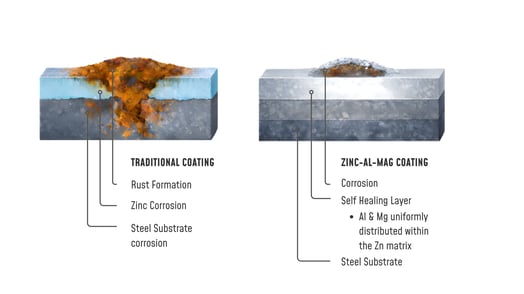
Sacrificial protection + enhanced barrier film created by the Al‑Mg alloy.
|
Sacrificial zinc protection only.
|
Durability & Corrosion Resistance
| Category | Zinc‑Al‑Mag Coating | Galvanised Coating |
|---|---|---|
| Corrosion Rate | Demonstrates significantly slower corrosion progression, particularly in chloride‑rich, industrial and high‑humidity zones. | Performs reliably in mild to moderate conditions but corrodes faster in coastal or pollutant‑exposed environments. |
| Red Rust Formation | Delayed. Dense corrosion film forms rapidly and remains stable over time. | Earlier onset in harsh environments, especially at cut edges. |
| Coastal Performance | Highly suited. Shows strong resistance where salt exposure accelerates corrosion. | Limited. Zinc alone breaks down more quickly in coastal atmospheres. |
| Industrial Performance | Strong. Handles airborne pollutants and wet‑dry cycling effectively. | Moderate. Prone to faster degradation in pollutant‑laden environments. |
.png?width=802&height=483&name=zinc-al-mag%20graphic%20(1).png)
Installation, Practicality & Maintenance
| Category | Zinc‑Al‑Mag Coating | Galvanised Coating |
|---|---|---|
| Cut‑Edge Protection | Excellent. Aluminium and magnesium stabilise corrosion, spreading over exposed edges and limiting undercutting. | Moderate. Cut edges are more vulnerable to red rust, especially in salt‑ or pollutant‑rich environments. |
| Maintenance Requirements | Generally lower due to slower corrosion and better edge stability. | Higher over time, especially in aggressive climates. |
|
Suitability for Thin Gauges
|
Performs reliably on thinner steel sections.
|
Less suitable where thin sections meet demanding exposure.
|
Life, Compliance & Value
| Category | Zinc‑Al‑Mag Coating | Galvanised Coating |
|---|---|---|
| Service Life (Indicative) | Long‑term engineering assessments indicate extended service life, including approximately 27.8 years in C4 zones for Zn-Al-Mg coatings. | Service life varies by environment; it is shorter in C3–C5 zones compared to Zinc‑Al‑Mag Top Hats. |
| Whole‑of‑Life Value | Higher value in demanding environments due to extended durability and lower maintenance. | Strong in mild environments; less cost‑effective in harsh exposure categories. |
| Compliance (AS 1397) | Classified under ZM coatings (e.g. ZM120, ZM200, ZM275). Meets durability criteria in the standard. | Classified under Z coatings (e.g. Z275). Long‑established and widely used. |
Conclusion
Galvanised steel remains a proven and reliable choice for many applications, supported by decades of successful use. Vitrafix Zinc‑Al‑Mag Top Hats build on that foundation, advancing the protective performance of metallic coatings through its stabilised alloy structure. Its enhanced durability, improved edge protection and longer service life make it particularly suitable for Australian conditions, especially in coastal and industrial environments where corrosion risks are elevated.
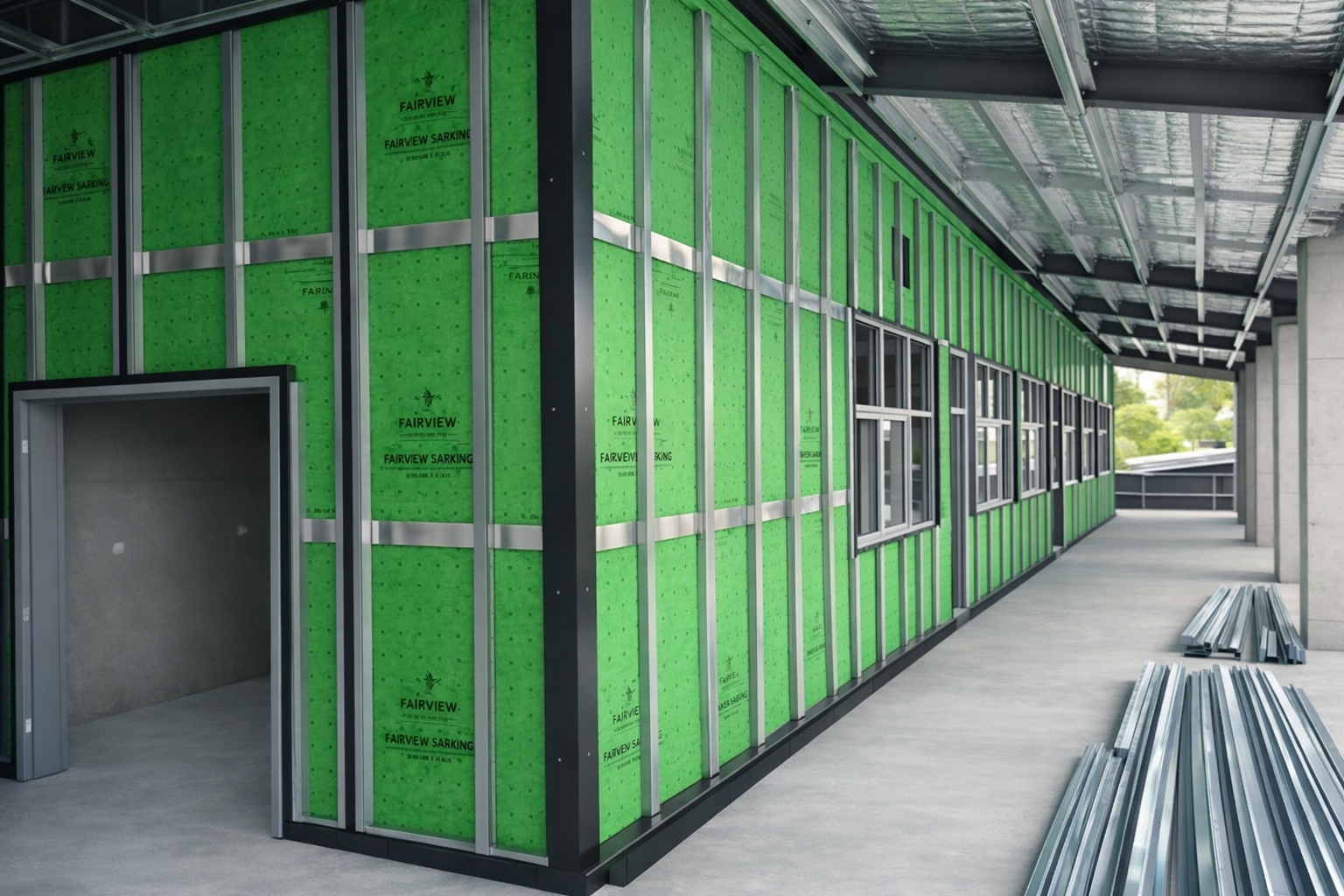
Selecting Vitrafix Zinc‑Al‑Mag Top Hats enables facade systems to perform more consistently over time while supporting compliance, durability, and sustainability objectives. When integrated into Fairview’s complete wall systems, it contributes to a robust, fully compliant solution that delivers long‑term value and confidence.